What To Pack For Greece In August: Islands, Heat, and Cobblestones
Packing for Greece in August means planning for two very different modes of travel that often happen in the same trip: island and beach days, and dry, intense city heat in places like Athens.
August is peak season and peak temperature, so what you pack needs to handle both a boat deck and a marble-paved archaeological site without missing a beat.
Heat here is dry rather than humid, but it’s relentless. Athens regularly pushes past 35°C (95°F), and the islands, while cooled slightly by sea breeze, still deliver strong, direct sun for most of the day. Whitewashed streets in the Cyclades reflect heat back at you, so shade becomes a real strategy, not just a preference.
Note: This is a complete packing list. If you’d rather travel light, there’s a pack-light section right after it.
What Is the Weather Like in Greece in August?
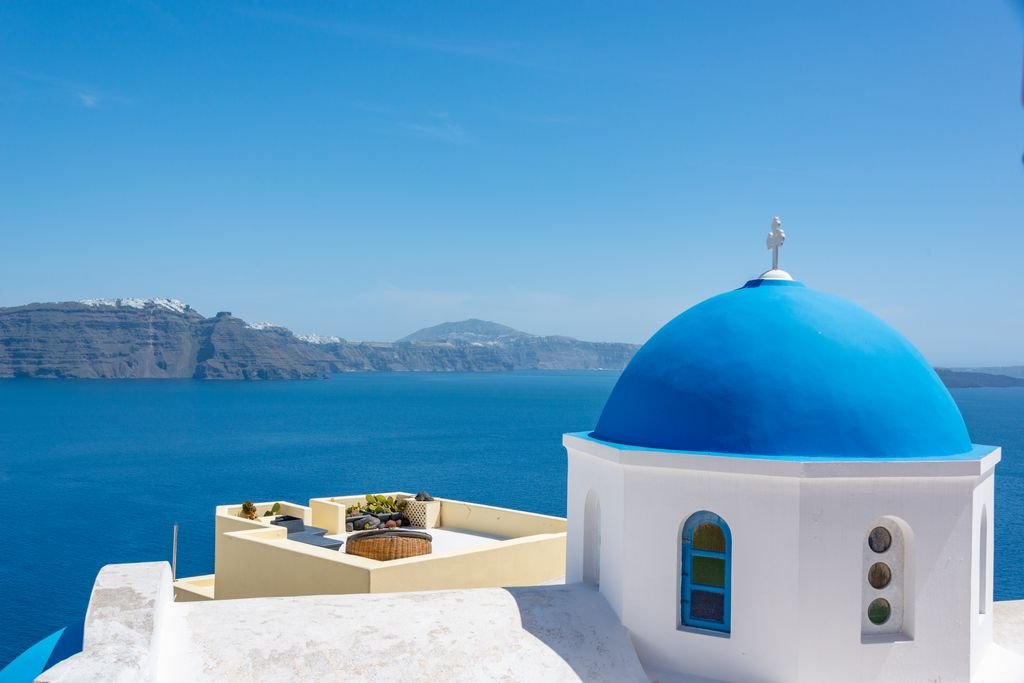
Greece in August is hot and dry, with daytime highs typically between 30°C and 35°C (86°F–95°F) in Athens and often similar or slightly cooler on the islands thanks to sea breeze.
The Meltemi wind can pick up strongly in the Cyclades during August, affecting ferry schedules and making some beach days breezier than expected. Evenings stay warm, so pack for hot days and mild, breezy nights.
Your Complete What To Pack For Greece In August
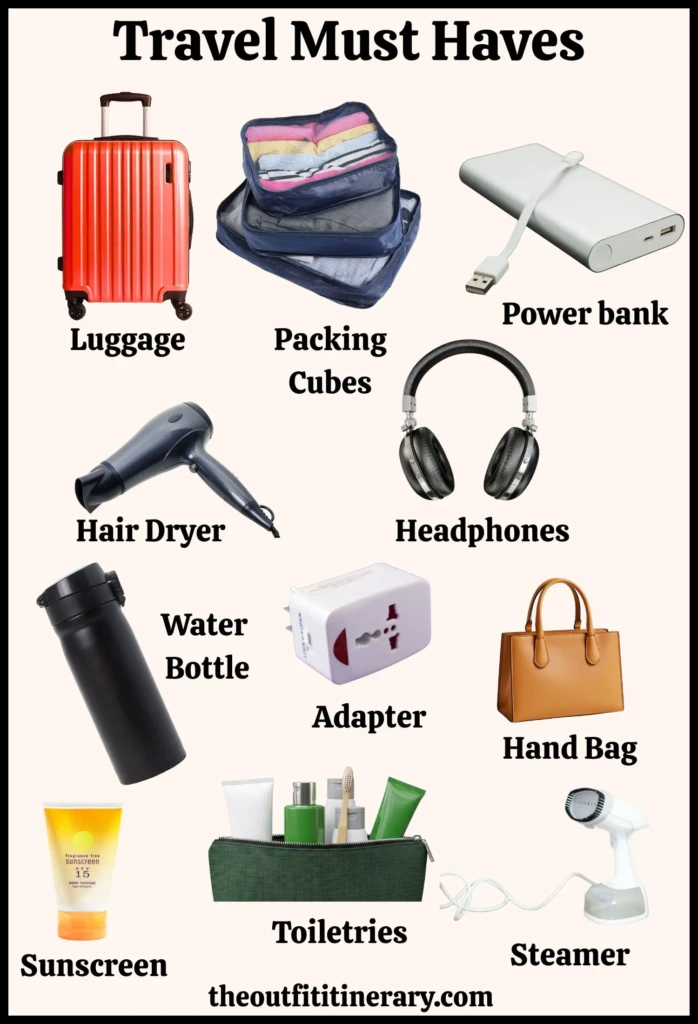
Packing well for Greece means balancing beach and boat days with city heat and historic sites, all while keeping your bag light enough to move between islands easily. Here’s everything worth bringing.
Luggage & Packing Tools
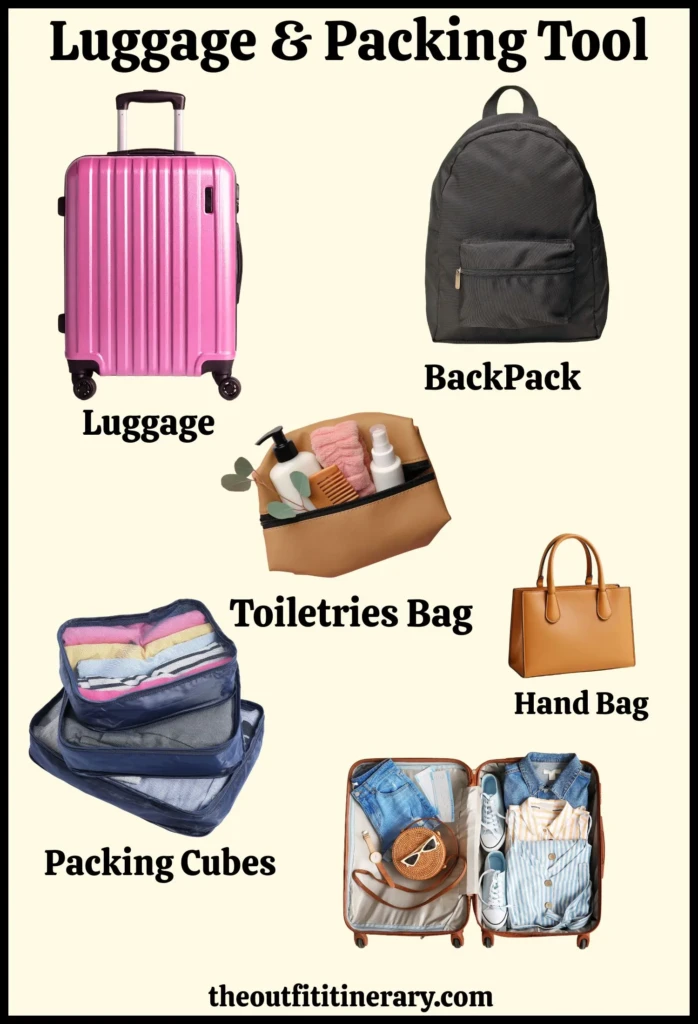
Ferries and small island transfers often mean carrying your own luggage up and down stairs or across gangplanks, so a lighter, more manageable bag matters here more than in most destinations. A packable day bag is useful for beach days and site visits.


- Soft-sided duffel or lightweight carry-on
- Quick-dry mesh beach tote
- Packable day bag for site visits
- Packing cubes set
- Waterproof phone and document pouch for boat days
- Small crossbody bag with a secure zipper
- Luggage ID tags
Clothes
Breathable natural fabrics — linen, cotton, and lightweight viscose — are essential in this dry heat. Pack one modest cover-up for visiting monasteries or churches, since bare shoulders and knees are often turned away at religious sites.


- Linen or cotton dresses (2–3)
- Breathable tops (4–6)
- Lightweight shorts (2)
- A cotton kaftan or cover-up for beach-to-town transitions (1)
- A modest outfit with covered shoulders and knees for monasteries (1)
- Swimsuits (2, so one can dry while you wear the other)
- One slightly dressier outfit for a nice dinner (1)
- Sleepwear that stays cool at night (2)
- Breathable underwear (6–8)
- No-show socks for walking shoes (4–6)
Shoes & Accessories
Marble and cobblestone streets in island towns get slippery fast, especially near the water, so sandals with real grip matter more here than in most Mediterranean destinations. Bring at least one sturdier pair for archaeological sites, which are often uneven and rocky.


- Grippy sandals for wet marble and cobblestones (1)
- Sturdier walking shoes for archaeological sites (1)
- Pool or beach slides (1)
- Wide-brim hat with a chin strap for windy ferry rides
- Sunglasses with UV protection
- Lightweight crossbody bag with a zipper
- A small dry bag for boat days and beach excursions
Skincare
Strong, direct sun and dry heat call for real sun protection reapplied often, especially on boat days where reflection off the water intensifies exposure.

- Broad-spectrum face sunscreen SPF 50
- Reef-safe, water-resistant body sunscreen SPF 50
- SPF lip balm
- After-sun aloe gel
- Lightweight, oil-free moisturizer
- Hydrating facial mist
- Hand cream for AC on ferries and buses
Makeup
- Tinted moisturizer or a light skin tint
- Waterproof mascara
- Cream blush
- Setting spray
- SPF lip tint
- Travel makeup remover wipes
Heat, sun, and swimming make heavy makeup impractical, so lean toward long-wear, waterproof, minimal formulas.
Hair Care
Sun, salt water, and wind (especially the Meltemi in the Cyclades) can rough up hair fast. Leave-in conditioner and simple, low-maintenance styling hold up better than anything requiring daily heat styling.
- Travel hair dryer
- Leave-in conditioner spray for sun and salt exposure
- Anti-frizz serum
- Dry shampoo
- Hair ties and clips
Documents & Essentials

- Passport
- Ferry tickets and island transfer confirmations
- Hotel confirmations
- Travel insurance details
- Credit card and a backup payment method
- Cash in euros for smaller islands and tavernas
- Emergency contact card
- Printed copies of key confirmations
First Aid
- Blister pads and moleskin
- Pain relievers
- Antihistamine tablets
- Motion sickness tablets for ferries (the Meltemi can make crossings choppy)
- Antiseptic wipes and bandages
- Hand sanitizer
Health & Hygiene
- Deodorant
- Travel toothbrush and toothpaste
- Hand sanitizer and travel tissues
- Feminine hygiene products
- Contact lenses and solution
- Mini fragrance or body spray
Tech & Electronics
Greece uses Type C/F plugs, so a European adapter covers your trip. A power bank matters most on ferry and island-hopping days when outlets aren’t always accessible.


- European travel adapter
- Power bank
- Phone charging cable and a backup cable
- Floating waterproof phone pouch for boats and beaches
- Camera for coastal and archaeological scenery
- Offline maps downloaded in advance
Entertainment
- A book or e-reader for ferry rides
- Downloaded playlists and podcasts
- Small travel journal and pen
- A basic Greek phrasebook or translation app
Extras
- Reusable water bottle
- Zip-top bags for wet swimsuits and snacks
- Stain remover pen
- Mini sewing kit
- A collapsible cooler bag for beach snacks and drinks
- A sarong that doubles as a towel, cover-up, or picnic blanket
Travel Tips
- Reapply sunscreen often, especially on boat days where water reflection intensifies exposure
- Choose sandals with real grip for wet marble and cobblestone streets
- Check ferry schedules for Meltemi wind delays if island hopping in August
- Dress modestly for monasteries: covered shoulders and knees are expected
- Carry cash for smaller islands and tavernas that may not accept cards
- Book popular sites like the Acropolis in advance to avoid the longest queues
- Pack two swimsuits so one can always be dry
Must-Haves
- Broad-spectrum, water-resistant sunscreen SPF 50
- Grippy sandals for wet marble and cobblestones
- A wide-brim hat with a chin strap
- European travel adapter
- Reusable water bottle
- Sunglasses with UV protection
- Motion sickness tablets for ferries
Good-to-Have
- A dry bag for boat days
- A sarong for beach and picnic versatility
- A modest outfit for monasteries
- Offline translation app
- A collapsible cooler bag for beach snacks
- Blister pads and moleskin
What to Bring If You Want to Pack Light
Greece in August rewards a small, breathable wardrobe more than a large one, since you’ll want quick-drying pieces that work for both beach days and city sightseeing.
- 3–4 breathable tops
- 1–2 linen or cotton dresses
- 2 swimsuits
- One pair of grippy sandals
- One sarong or kaftan for beach-to-town transitions
- Sunglasses, a hat, and travel-size sunscreen
What Not to Pack for Greece in August
Leave heavy fabrics and anything requiring ironing at home — dry heat and casual island life make both impractical.
- Heavy jeans or thick fabrics for daytime
- Smooth-soled sandals with no grip for wet marble streets
- Sleeveless tops with nothing to cover shoulders for monastery visits
- A large hard-shell suitcase if your trip includes ferries or small boats
- A full bottle of sunscreen and toiletries you can easily buy locally
FAQ: Packing for Greece in August
Is Greece too hot in August?
It’s genuinely hot, often 30–35°C (86–95°F) in Athens, though sea breeze softens the heat somewhat on the islands. It’s manageable with breathable clothing, frequent hydration, and pacing your day around the hottest hours.
What should you not wear at Greek monasteries?
Sleeveless tops, shorts, and generally exposed shoulders or knees are turned away at most monasteries and some churches. A lightweight cover-up or sarong solves this without needing a separate outfit.
What shoes are best for the Greek islands?
Sandals with real grip for wet marble and cobblestone streets, plus a sturdier pair of walking shoes for uneven archaeological sites. Smooth-soled sandals can be genuinely dangerous on wet stone near the water.
Does it get windy in Greece in August?
Yes, especially in the Cyclades, where the Meltemi wind picks up strongly in summer. It can affect ferry schedules and make some beach days breezier than expected, so pack a hat with a chin strap.
Do I need a plug adapter for Greece?
Yes. Greece uses Type C and F plugs, common across much of continental Europe. A standard European travel adapter covers your entire trip.
What should I pack for a week in Greece in August?
Focus on 5–6 breathable tops, 2 linen or cotton dresses, 2 swimsuits, one pair of grippy sandals, a sarong or kaftan, sunglasses, a hat, and reef-safe sunscreen. Add a modest cover-up if monastery visits are on your itinerary.